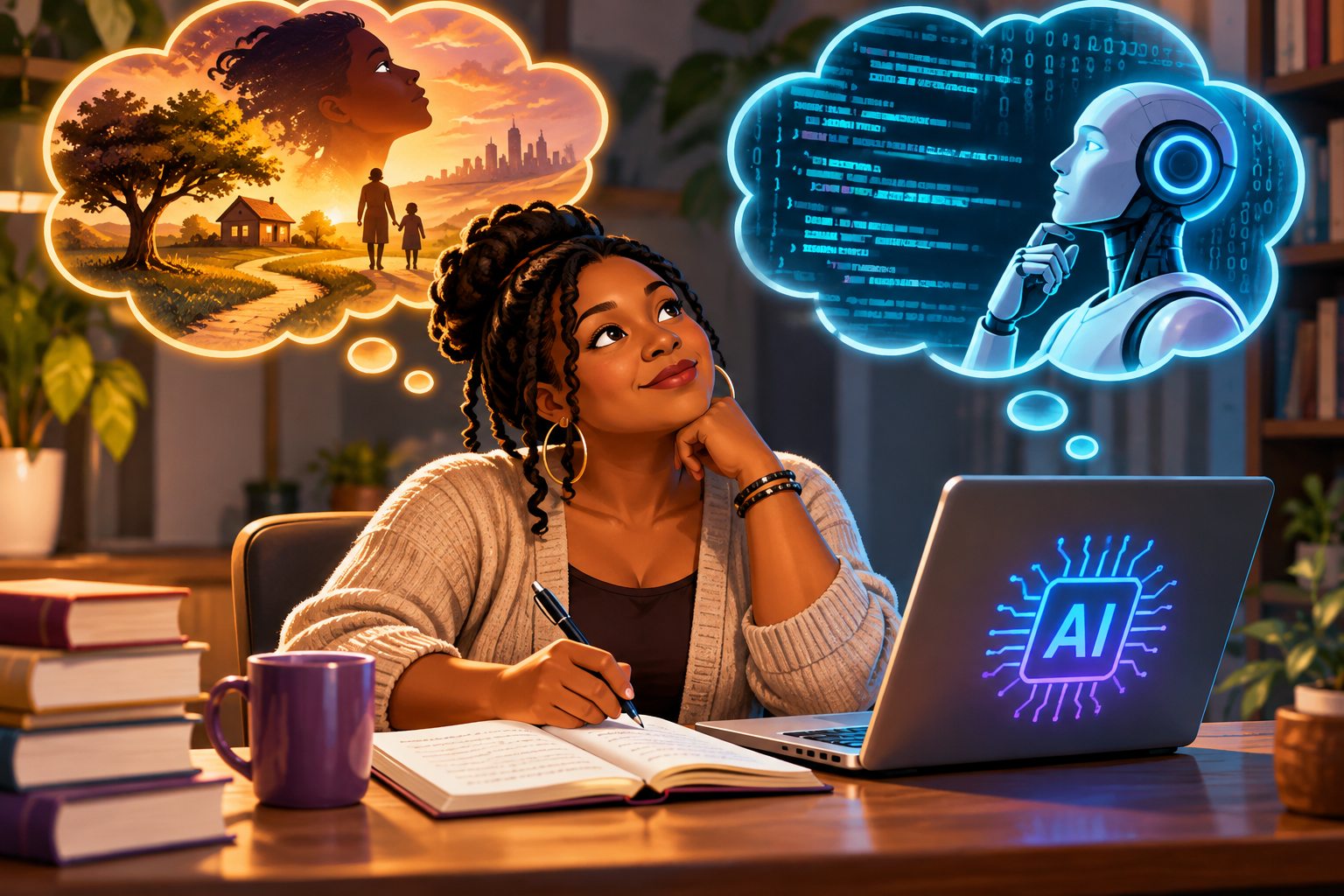
Artificial intelligence has quickly become one of the most talked-about tools in the writing and publishing world. From brainstorming ideas and organizing thoughts to editing manuscripts and creating marketing content, AI offers writers opportunities to make the writing process easier and more efficient.
But just because AI can help you write doesn't mean it should do all the writing for you. As a writer, your creativity, experiences, perspective, and voice are what make your work unique. The key is learning how to use AI as a tool without becoming dependent on it.
Here are three tips to keep in mind when incorporating AI into your writing process.
1. Use AI as an Assistant, Not a Replacement
One of the biggest mistakes writers can make is allowing AI to take over the creative process. AI can generate ideas, suggest topics, organize information, and even produce entire paragraphs. However, it doesn't have your personal experiences, emotions, or unique perspective.
Instead of asking AI to do all the writing for you, use it to help you work through challenges. For example, if you're struggling with a chapter, you can ask AI to help you brainstorm different approaches. If you're unsure how to organize your thoughts, you can ask it to suggest an outline.
Think of AI as an assistant sitting beside you, not an author sitting in your chair.
Remember: The goal is to enhance your creativity, not outsource it.
2. Don't Sacrifice Your Voice for Perfect Grammar
AI can be incredibly helpful when it comes to proofreading, correcting grammar, improving sentence structure, and identifying awkward wording. However, there's a difference between correcting your writing and changing your writing style.
Sometimes, the things that make your writing unique are the very things AI might try to change. Your choice of words, sentence structure, tone, and even the way you express certain thoughts contribute to your writing voice.
For example, you might intentionally use conversational language because you want readers to feel like they're having a conversation with you. AI might suggest replacing those expressions with something more formal. While the suggestion may be grammatically correct, it might not be the right choice for your audience or writing style.
Don't automatically accept every recommendation AI makes. Review its suggestions, make adjustments, and decide what works best for your writing.
Remember: Your writing doesn't have to sound like everyone else's to be good writing.
3. Fact-Check, Review, and Take Responsibility for Your Work
AI can provide information quickly, but that doesn't mean everything it generates is accurate. It can misunderstand questions, present outdated information, or even generate facts, statistics, references, and sources that aren't real.
This is particularly important when writing nonfiction, educational materials, articles, and books that contain factual information.
Never assume that something is accurate simply because AI presented it confidently. Verify important information using credible sources, double-check references, and make sure the content accurately represents what you intend to communicate.
You should also be mindful of copyright, privacy, and the policies of publishers or platforms when using AI-generated material.
Ultimately, you are responsible for the work you publish, regardless of how much assistance you received from AI.
Remember: AI can help you produce content, but you are responsible for its accuracy and integrity.
Final Thoughts
AI is changing the writing industry, and writers who learn how to use it effectively may find themselves with more opportunities to improve their productivity and streamline their creative processes.
However, don't become so focused on producing content quickly that you lose sight of what makes you a writer in the first place.
Your experiences, ideas, knowledge, creativity, and perspective are valuable. AI can help you develop and communicate those things, but it shouldn't replace them.
Use AI to strengthen your writing, not surrender your creativity.
After all, technology may help you put words on a page, but you are the one with a story worth telling.
