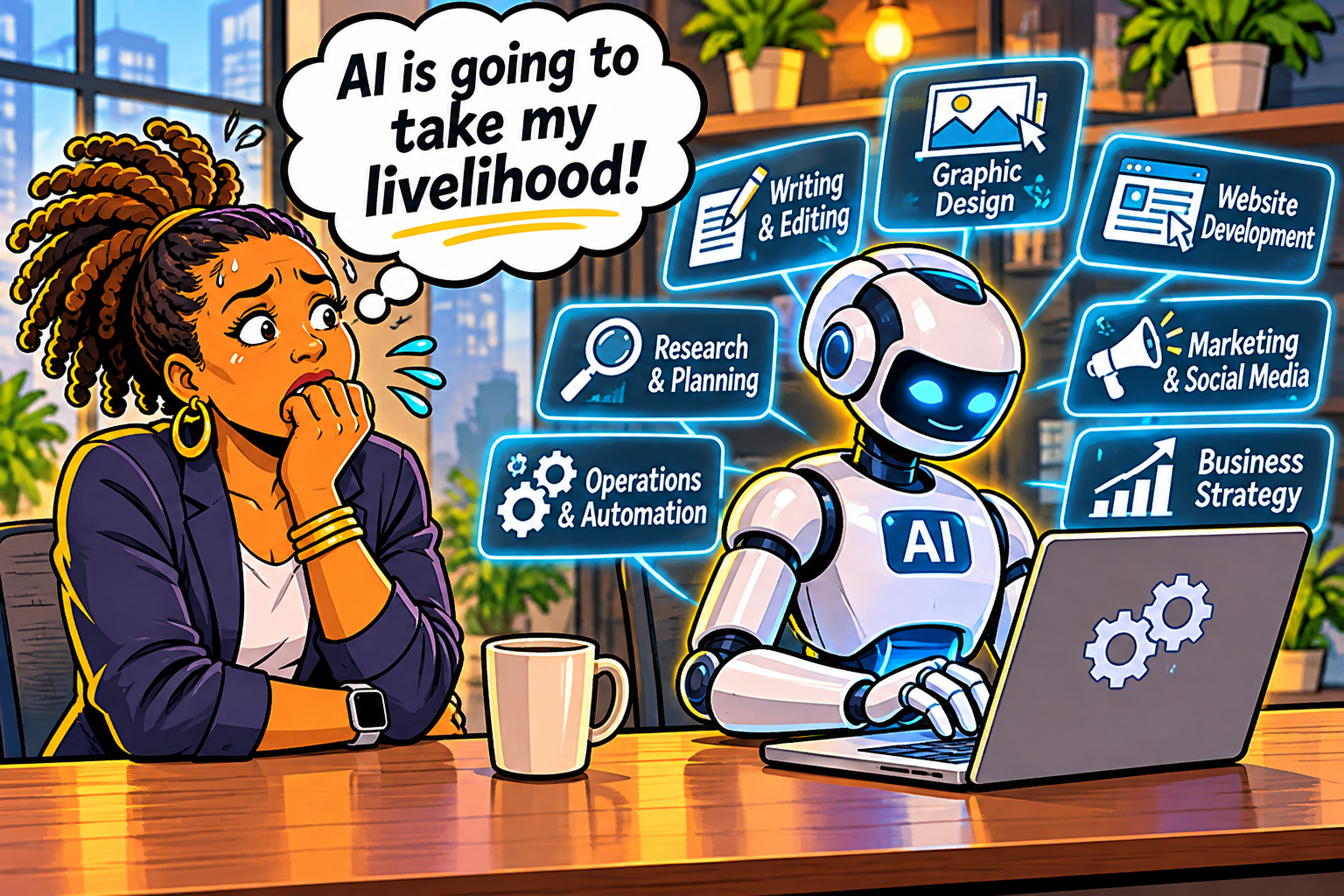
Artificial intelligence is changing the world of work, and not everyone is excited about it. In fact, many people are concerned that AI is going to make their jobs obsolete. From customer service representatives and graphic designers to writers, accountants, marketers, and even educators, it seems like there isn't an industry that isn't being affected by this rapidly developing technology.
And let's be honest: some of those concerns are legitimate.
AI can write articles, generate images, analyze data, answer customer questions, create presentations, and perform tasks that once required hours of human labor. Businesses are discovering that they can use AI to increase productivity, reduce expenses, and complete certain tasks with fewer employees.
So, should you be afraid that AI is going to take your job? I don't think fear is necessarily the right response. However, I do think people need to pay attention.
AI Is Changing Jobs, Not Just Eliminating Them
One of the biggest misconceptions about AI is that it will either take everyone's job or have very little impact on the workforce. The reality is likely somewhere in between.
Throughout history, technological advancements have changed the way people work. The introduction of computers, the internet, automated manufacturing, and digital communication all changed industries and eliminated certain types of jobs. At the same time, those advancements created new opportunities and entirely new career paths.
AI is following a similar pattern, although the speed and scope of its development present some unique challenges. Some jobs will disappear. Others will require fewer employees. Certain responsibilities will become automated, while new positions will emerge to support, manage, and develop AI technology. The important distinction is that AI may not eliminate an entire profession, but it could eliminate some of the tasks people are currently being paid to perform.
For example, a graphic designer might use AI to generate initial concepts, remove backgrounds, or create visual elements. A writer might use AI to brainstorm ideas, organize research, or proofread content. A business owner might use AI to draft emails, develop marketing strategies, and analyze customer information.
These tools can make people more productive, but they also change what employers expect from their employees. The question is no longer just whether you can perform a particular task. It's whether you can offer something valuable beyond what technology can already do.
The Real Risk May Be Refusing to Adapt
I understand why people are hesitant about AI. Some are concerned about losing their income, while others feel that AI is undermining the value of their education, experience, and professional skills.
Those concerns shouldn't be dismissed.
However, refusing to acknowledge or learn about AI isn't going to stop its development. Whether we like it or not, businesses are already incorporating AI into their operations. Consider two employees performing similar jobs. One understands how to use AI to complete certain responsibilities more efficiently, while the other refuses to learn anything about it. If an employer is looking to improve productivity, reduce expenses, or increase output, which employee might have the advantage?
This doesn't mean that everyone needs to become an AI expert or learn how to program. It means understanding how AI applies to your particular industry and identifying opportunities to use it to your advantage.You don't have to embrace every new technology, but you should understand enough about it to make informed decisions about your career.
The goal shouldn't be to compete with AI at everything it does. The goal should be to understand where human skills and technology can work together.
Human Skills Are Still Valuable
One thing that often gets overlooked in conversations about AI is the value of human judgment, creativity, relationships, and experience.
AI can generate a response, but that doesn't necessarily mean it understands the circumstances surrounding the question. It can produce an image, but it doesn't automatically understand the message a business is trying to communicate. It can write an article, but it doesn't necessarily understand the personal experiences, convictions, or perspectives that make someone's message meaningful.
There is a difference between producing content and communicating something with purpose.
Human beings bring experiences, emotions, personal perspectives, cultural understanding, and the ability to build relationships. These qualities matter in business, leadership, education, healthcare, customer service, and countless other industries.
Of course, we shouldn't assume that human skills will automatically protect every job. AI is becoming increasingly capable, and employers will continue evaluating which responsibilities require human involvement.
However, people who develop strong communication, critical thinking, problem-solving, leadership, and interpersonal skills will have important qualities to bring to the workplace.
Technology can be a powerful resource, but knowing how to use it responsibly and effectively is a skill in itself.
Small Businesses Should Pay Attention Too
AI isn't just changing the employment landscape for large corporations. It's also changing the way small businesses operate. For small business owners, AI can provide access to tools and resources that might have previously been too expensive or time-consuming. A small business owner can use AI to brainstorm marketing ideas, draft website content, develop social media campaigns, organize information, and streamline administrative responsibilities. This can help businesses operate more efficiently without immediately having to hire additional employees or outsource every task. However, there is a downside.
As AI makes certain services easier to produce, competition may increase. Businesses that once stood out because they offered a particular service may find that more people can now offer something similar with the assistance of AI. That means small businesses will need to think beyond simply offering a product or service. Customer relationships, quality, reliability, personal attention, industry knowledge, and a recognizable brand will continue to matter.
AI can help you run your business, but it shouldn't become your entire business strategy.
Don't Just Learn How to Use AI. Learn How to Think Beyond It.
I believe one of the biggest mistakes people can make is focusing so much on learning how to use AI that they stop developing their own abilities. AI should be a tool that supports your knowledge, not a replacement for developing it.
If you're a writer, continue learning how to write. If you're a graphic designer, continue developing your design skills. If you're a business owner, continue learning about your industry, customers, and the marketplace. Don't become so dependent on AI that you lose the ability to evaluate the quality of its work. AI can make mistakes. It can provide inaccurate information, generate misleading content, and produce results that look impressive but lack substance. You still need the knowledge and experience to recognize when something isn't right.
The people who will be in a better position to navigate this changing environment are those who combine their existing skills with an understanding of emerging technology.
Don't abandon your expertise. Build on it.
So, Should You Be Afraid?
I don't think people should ignore the potential consequences of AI, especially when their livelihoods are involved. There are legitimate concerns about job displacement, economic inequality, privacy, and how businesses will use this technology.
We also need conversations about how employees will be supported when their jobs change or disappear. Not everyone will have the same opportunities to retrain, and we shouldn't place the entire responsibility for adapting on individual workers. Businesses, educational institutions, and policymakers have a role to play in preparing people for the future of work.
But I also don't believe fear should prevent us from exploring the opportunities technology can create. AI isn't going away. The workplace is changing, and we have to decide how we are going to respond. Instead of spending all our time worrying about what AI might take away, perhaps we should spend more time considering what we can learn, create, improve, and accomplish with the resources now available to us.
The future of work may look very different from what we imagined, but that doesn't mean we have no place in it.
Don't let fear of being replaced keep you from preparing to evolve.
